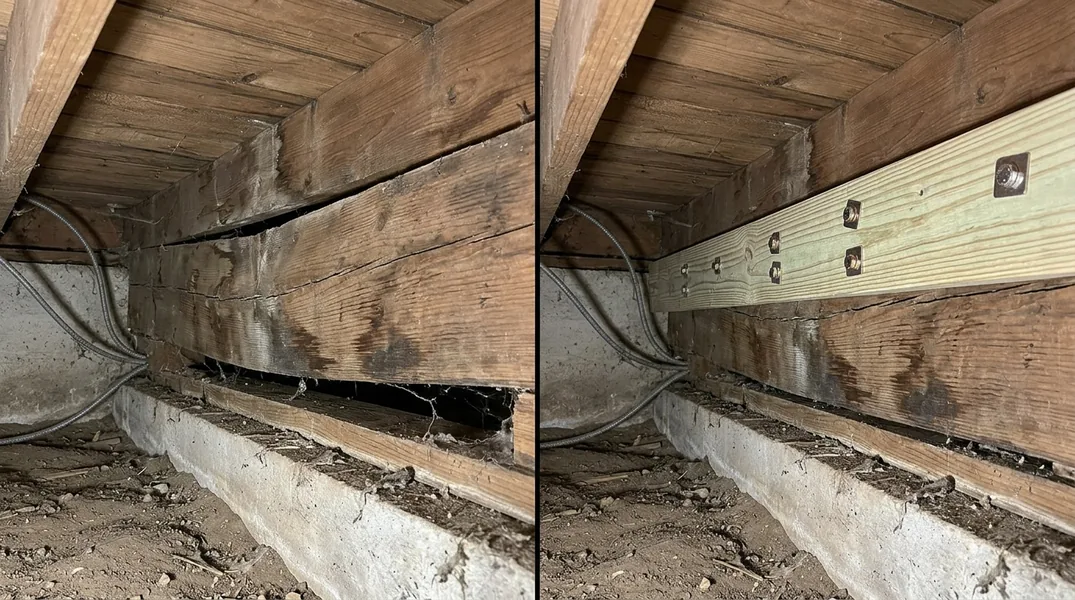
Why Is My Floor Sagging? Common Causes in Older Spokane Homes
If you own an older home in Spokane, you may have noticed your floors dipping slightly in certain rooms or hallways. That sag is not just cosmetic. It signals that the structural support beneath your feet is weakening, and the sooner you understand why, the sooner you can address it.
The most common culprit behind sagging floors in older homes is Wood Rot and Dry Rot Repair in the floor joists themselves. Spokane's climate, with its freeze-thaw cycles and occasional moisture intrusion through aging foundations, creates the perfect environment for wood to deteriorate. When joists lose their structural integrity due to rot, they can no longer support the weight of the floor above, causing that telltale sag. Another frequent cause is Termite Damage Repair issues. Termites tunnel through wood, hollowing it out from the inside while leaving the surface looking deceptively normal. By the time you notice a sagging floor, termite damage may be extensive.
Settlement and foundation movement also play a role. Older homes sometimes shift slightly over decades, and if the support beams or posts beneath the floor have settled unevenly, the floor above will follow suit. Additionally, undersized or inadequately spaced floor joists in homes built before modern building codes can fail under load, especially if the home has been modified or additional weight has been added over time.
Understanding Floor Joist Repair and Sistering Floor Joists
When a floor joist is damaged but not completely compromised, Floor Joist and Subfloor Repair professionals often recommend sistering floor joists as a cost-effective solution. Sistering involves installing a new piece of lumber alongside the damaged joist and fastening them together securely. This doubles the load-bearing capacity of that section and redistributes weight more evenly across the support structure.
The sistering process requires precision. The new joist must be the same size and grade as the original, and it needs to be fastened with bolts, screws, or nails spaced according to structural engineering guidelines. The connection points are critical. If fasteners are too far apart, the joists won't act as a single unit, and the repair will fail. A qualified carpenter will also assess whether the rot or damage extends beyond what's visible on the surface, as hidden decay can compromise the entire repair strategy.
Sistering works best when the damage is localized to one or two joists and the underlying cause (moisture, termites, or settlement) has been identified and corrected. If you simply sister a joist without fixing the moisture problem that caused the rot in the first place, the new wood will eventually rot too. This is why a comprehensive inspection and moisture management plan are essential before any repair begins.
When Sistering Isn't Enough: Beam Replacement and Structural Solutions
In some cases, sagging floors signal a more serious structural failure that goes beyond individual joist repair. If the main support beam beneath the floor has failed, or if multiple joists are compromised, sistering alone won't solve the problem. This is where Beam Replacement and Load-Bearing Wall Removal expertise becomes necessary.
A structural engineer or experienced carpenter will examine the foundation, posts, and beams to determine if they are adequate for the load they carry. Older homes sometimes have undersized beams, or beams that have settled and no longer sit properly on their supports. In these cases, installing a new beam or reinforcing the existing one may be the only way to permanently fix the sag. This is a more involved and costly repair, but it addresses the root cause rather than treating a symptom.
The process typically involves temporarily supporting the floor above with adjustable posts or hydraulic jacks while the old beam is removed or reinforced and a new one is installed. This work requires careful planning and often a permit from the local building department in Spokane. It is not a DIY project, and attempting it without professional guidance can lead to catastrophic failure or injury.
Sagging Floor Repair Cost in Spokane: What to Budget
The cost of repairing a sagging floor varies widely depending on the extent of damage, the number of joists affected, and the underlying cause. A simple sistering repair for one or two joists might run between $1,500 and $4,000, while a full beam replacement could easily exceed $10,000 to $25,000 or more. To get an accurate sense of what your repair will cost, you need a thorough inspection and a detailed estimate from a qualified contractor.
Several factors influence pricing for floor repairs. First is access. If the damaged joists are in a basement or crawl space that's easy to reach, labor costs are lower. If the repair requires removing flooring, subfloor, or finished materials above, costs climb quickly. Second is the scope of damage. A single rotted joist is cheaper to repair than discovering that rot has spread to half a dozen joists and the rim board. Third is the cause. If the damage is due to a plumbing leak or foundation moisture, you'll need to address that issue too, which adds to the overall project cost.
Many homeowners are surprised to learn that the repair itself may be only half the cost. Fixing the underlying moisture problem, improving drainage around the foundation, or installing a vapor barrier in a crawl space are essential but add to the total investment. However, these preventative measures protect your repair and prevent future damage. When you request a free estimate from Spokane Carpentry, ask for a breakdown that includes the repair, any moisture mitigation, and a timeline for completion.
How to Know If Your Floor Sag Needs Immediate Attention
Not every uneven floor demands emergency repair, but some warning signs should prompt you to call a professional right away. If you notice a sudden new sag that developed over weeks or months (rather than the slow settling that occurs over decades), something is actively failing. If the sag is accompanied by cracks in walls, doors that no longer close properly, or visible rot or mold around the foundation or crawl space, these are red flags that structural damage is underway.
Pay attention to bouncy or springy floors as well. A slight give when you walk is normal in older homes, but excessive bounce indicates that joists have lost rigidity. If you smell musty odors in the basement or crawl space, or if you see water stains on joists or beams, moisture damage is likely. Any of these signs warrant a professional inspection. The longer you wait, the more the damage spreads, and the more expensive the repair becomes.
If you're in the Spokane area and concerned about sagging floors in your home, don't guess or delay. Contact Spokane Carpentry at (509) 844-9336 to schedule an inspection. A trained eye can often spot problems that homeowners miss, and catching damage early can save thousands of dollars in repair costs down the road.
Getting Professional Help: What to Expect from a Floor Repair Contractor
When you hire a contractor to repair sagging floors, expect them to begin with a thorough inspection. They should examine the joists, beams, posts, and foundation from multiple angles. They'll look for signs of rot, termite damage, moisture, and structural settlement. A good contractor will also check the grading around your home's exterior to see if water is draining away properly, and they may recommend a crawl space inspection or moisture testing to identify hidden problems.
After the inspection, you should receive a detailed written estimate that explains what's wrong, what repairs are recommended, why those repairs are necessary, and what the costs will be. The estimate should distinguish between the primary repair (sistering joists, replacing a beam) and any secondary work (moisture control, ventilation improvements) that's needed to prevent recurrence. A reputable contractor will also discuss the timeline and any permits or inspections required by local building authorities.
Spokane Carpentry brings years of experience diagnosing and repairing structural issues in older homes throughout the region. Whether your floor sag is caused by rot, termites, settlement, or undersized joists, a professional assessment is the first step toward a lasting solution. Reach out today for a free estimate and take control of your home's structural health.
Looking for a professional carpentry contractor in Spokane? Spokane Carpentry responds fast for all your carpentry needs.
Get a Free QuoteOur services: Wood Rot & Dry Rot Repair · Termite Damage Repair · Floor Joist & Subfloor Repair