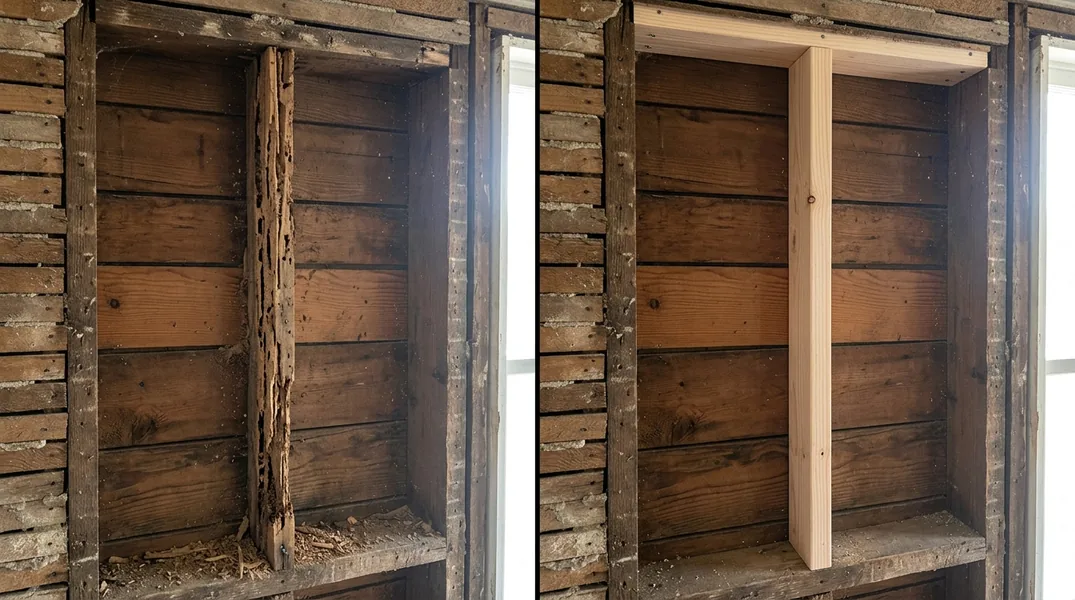
Carpenter Ants vs. Termites: Why the Difference Matters in Spokane
Many homeowners in Spokane assume that any wood-destroying insect is a termite. That assumption can be costly. Carpenter ants and termites cause damage in fundamentally different ways, and understanding the distinction is critical to protecting your home.
Termites actually eat wood as a food source, breaking down the cellulose fibers and gradually hollowing out structural members from the inside. Carpenter ants, by contrast, do not eat wood. Instead, they excavate galleries and tunnels through wood to create nesting sites. They hollow out chambers, leaving behind sawdust-like frass (insect droppings) as evidence of their activity. While the end result looks similar on the surface, the biology is different, and so is the treatment approach. This distinction matters because it affects how you identify the problem, how quickly it spreads, and what kind of professional help you need.
Signs of Carpenter Ant Damage: What to Look For in Your Home
The most obvious sign of carpenter ant damage is the presence of small, neat piles of sawdust or frass near wooden structures. Unlike termite damage, which is often hidden deep inside wood, carpenter ant galleries are sometimes visible on the surface or just beneath the bark of wooden trim, fascia, and siding. You may notice small, round exit holes where worker ants have chewed through the wood surface. These holes are typically about the size of a pencil lead and appear clean and smooth around the edges.
Another telltale sign is hearing faint rustling or crunching sounds coming from inside walls, especially at night when the colony is most active. If you tap on suspected areas with a hammer, hollow-sounding wood is a red flag. You might also observe actual carpenter ants near the damaged wood, particularly in spring and summer when they are most active. These ants are large, typically black or reddish-black, and noticeably bigger than common household ants. If you spot any of these signs in your Spokane home, do not wait. The longer a colony remains undisturbed, the more extensive the damage becomes, and the more expensive the repairs will be.
How Carpenter Ant Damage Leads to Structural Problems
Carpenter ant colonies can grow to include thousands of workers, and a single mature nest can span multiple areas of your home. As they tunnel through structural members like floor joists, beams, and wall studs, they compromise the integrity of your home's skeleton. The damage is progressive. What starts as a small colony in a windowsill or soffit can expand into major structural decay over the course of two to five years if left untreated.
The real danger emerges when carpenter ants tunnel through load-bearing elements. Floor joists that have been extensively tunneled become weak and may sag, causing floors to feel soft or springy underfoot. Beams supporting upper floors or roofs can lose their load-bearing capacity, creating safety hazards and requiring expensive structural repairs. In severe cases, homeowners face Floor Joist & Subfloor Repair or even Beam Replacement & Load-Bearing Wall Removal. The cost of these repairs can quickly escalate into the tens of thousands of dollars, which is why early detection and professional treatment are so important.
Carpenter Ant Damage Repair: What the Process Involves
Once carpenter ants have been confirmed in your home, the first step is professional pest control treatment to eliminate the colony. However, pest control alone does not repair the structural damage they have already caused. That is where Wood Rot & Dry Rot Repair specialists come in. A qualified carpenter will assess the extent of the damage, determine which structural members are compromised, and recommend repair or replacement options.
Minor damage in non-structural areas like trim, fascia, or siding can often be repaired by removing the damaged section and replacing it with new wood. More significant damage in structural areas requires careful evaluation. In some cases, damaged joists or beams can be reinforced with sister joists or supplemental bracing. In other cases, complete replacement is necessary. The key is getting a professional assessment from someone who understands both the carpentry and the structural implications. Spokane Carpentry specializes in identifying the full scope of carpenter ant damage and delivering lasting repairs that restore both the appearance and safety of your home.
Carpenter Ant Damage Repair Cost in Spokane: What to Budget
The cost of repairing carpenter ant damage varies widely depending on the extent of the infestation, the location of the damage, and the structural members involved. Small, localized damage in trim or exterior siding might cost a few hundred dollars to repair. However, damage that extends into floor joists, wall studs, or beams can easily run into thousands of dollars. A single floor joist replacement, for example, can cost between 500 and 2,000 dollars depending on accessibility and the size of the joist. Multiple joists or beam replacements push costs significantly higher.
The best way to understand your specific repair needs and pricing is to get a professional inspection and free estimate from a trusted local carpenter. Spokane Carpentry offers comprehensive inspections that document all damage and provide clear, itemized repair estimates. This transparency helps you make informed decisions and budget accordingly. Remember that the cost of addressing carpenter ant damage now is far less than the cost of ignoring it and dealing with catastrophic structural failure later.
Preventing Carpenter Ants and Protecting Your Home
Prevention is always more cost-effective than repair. Carpenter ants are attracted to moisture and decaying wood, so the first line of defense is keeping your home dry. Fix leaky roofs, gutters, and downspouts promptly. Ensure that grading around your foundation directs water away from your home. Repair or replace any wood that shows signs of rot or decay, as this is a magnet for carpenter ants. Keep wood mulch and leaf litter away from your foundation and siding, and trim tree branches that touch your roof or walls, as these provide highways for ants to access your home.
Regular inspections are also essential, especially in older homes or those with a history of moisture problems. Walk around your home at least twice a year, looking for the signs of carpenter ant damage we discussed earlier. Pay special attention to areas where water is more likely to accumulate or where wood is in contact with soil. If you spot any warning signs, contact a professional immediately. The sooner you address the problem, the less damage will occur and the lower your repair costs will be. If you live in Spokane and suspect carpenter ant activity in your home, call Spokane Carpentry at (509) 844-9336 to schedule an inspection today.
Looking for a professional carpentry contractor in Spokane? Spokane Carpentry responds fast for all your carpentry needs.
Get a Free QuoteOur services: Wood Rot & Dry Rot Repair · Termite Damage Repair · Floor Joist & Subfloor Repair